Climbing Structures vs. Swings: Which Do Kids Use More?
“Which is cooler, soaring through the air or conquering the jungle gym?” If you’ve ever watched kids at recess, you know this is a serious question. Swings and playground climbing structures have long been playground royalty, but when it comes to actual usage, which one really gets more action?
At PlaygroundEquipment.com, we live and breathe play. With decades of experience designing and supplying playground equipment, we’ve seen firsthand how children engage with different features—and we’re here to break down the swing vs. climbing debate with insight, not guesswork.
Climbing Structures: The Real-Life Adventure Course
Climbing equipment isn’t just hardware bolted to the ground—it’s the closest thing kids get to an everyday adventure. What used to be a simple set of monkey bars has evolved into sprawling, multi-level towers that are packed with different sets of adventures, rope nets that wobble just enough to thrill, and geometric domes that practically beg to be conquered.
Here’s the beauty of playground climbing structures: they don’t hand kids the same experience twice. Every climb is a puzzle. One moment, a child is testing their grip on a vertical net, the next they’re plotting a new route across the bars, racing against gravity and themselves. That variety keeps kids coming back long after the swing’s novelty wears off.
And speaking of variety, just look at all the different ways kids reach new heights:
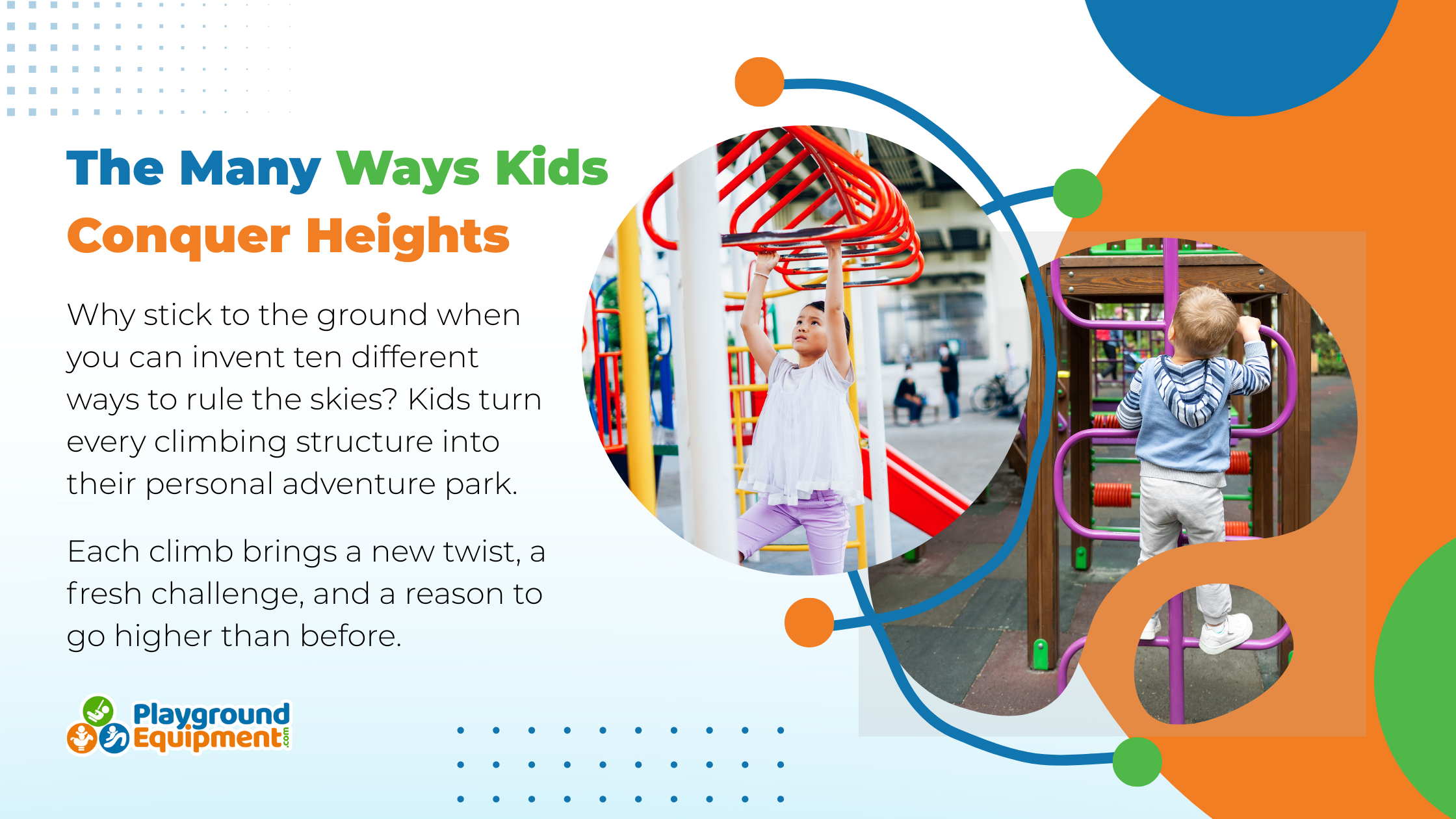
Climbing isn’t just fun—it’s full-body training hidden inside adventure. Arms, legs, and core are constantly at work. Spatial awareness sharpens as kids decide where to place each hand and foot, and problem-solving kicks in the moment their “shortcut” fails. Add the social side—cheering, racing, inventing games—and playground climbing structures quickly turn into mini arenas, half obstacle course, half imaginary world.
Bottom line? Climbing structures turn the playground into a stage for adventure, teamwork, and the kind of risk-taking that builds confidence, not just calluses.
Swings: The Original Playground Thrill Ride
Swings are the playground’s original thrill ride: no tickets, no seatbelts, just pure air-time magic. They’ve been around for generations, and their appeal is instant: the rush of wind in your face, the rhythmic back-and-forth, and the unbeatable feeling of flying. For plenty of kids, the swing set isn’t just a stop on the playground; it’s the launchpad.
Swings aren’t just fun—they serve developmental purposes. The back-and-forth motion helps children develop balance, coordination, and a sense of rhythm. Socially, swings also foster cooperation, as kids often take turns pushing each other or waiting patiently in line. And for children with sensory processing needs, the calming, repetitive motion of swinging can be particularly therapeutic.
However, swings can be limiting. Once a child reaches a certain age or skill level, the motion alone may not provide enough challenge. For older kids with boundless energy, the repetitive motion can’t always compete with the complexity of climbing structures.
Who Plays Where: Swings or Climbs?
So, which piece of equipment do kids actually use more? The answer often depends on three main factors: age, playground design, and peer influence.
Age Makes a Difference
Younger children gravitate toward swings because of the simplicity and instant reward. Older kids lean toward playground climbing structures for the challenge and variety.
Location, Location, Location
If swings are tucked into a corner, they may see less traffic than a centrally located climbing dome. Conversely, if swings are highly visible and accessible, kids will naturally flock to them.
Follow the Leader
Children often follow the crowd. If the “cool kids” are hanging out on the climbing net, others will join. Swings may be more solitary, but when used in pairs or groups, they can spark competition over who can swing the highest.
In the end, playground climbing structures tend to keep kids hooked longer, offering endless challenges and room for creativity, while swings deliver quick hits of joy and friendly competition. It’s less about which is “better” and more about how each brings its own magic to the playground.
Supervision: The Secret Rule of Playgrounds
Another big factor in how kids use equipment comes down to safety. Swings, while beloved, create what many teachers call the “no-go zone.” The back-and-forth motion means kids waiting nearby can easily wander into the path of a moving seat, so supervision is often stricter. To keep things safe and fair, adults may even set time limits, which naturally cut down on swing time.
Playground climbing structures play by a different set of rules. They still require supervision, but modern designs incorporate safety features of their own—such as cushioned surfacing, sturdy handholds, and enclosed areas that minimize the risk of serious falls. And with the right guidance, kids don’t just stay safe—they get braver, too.
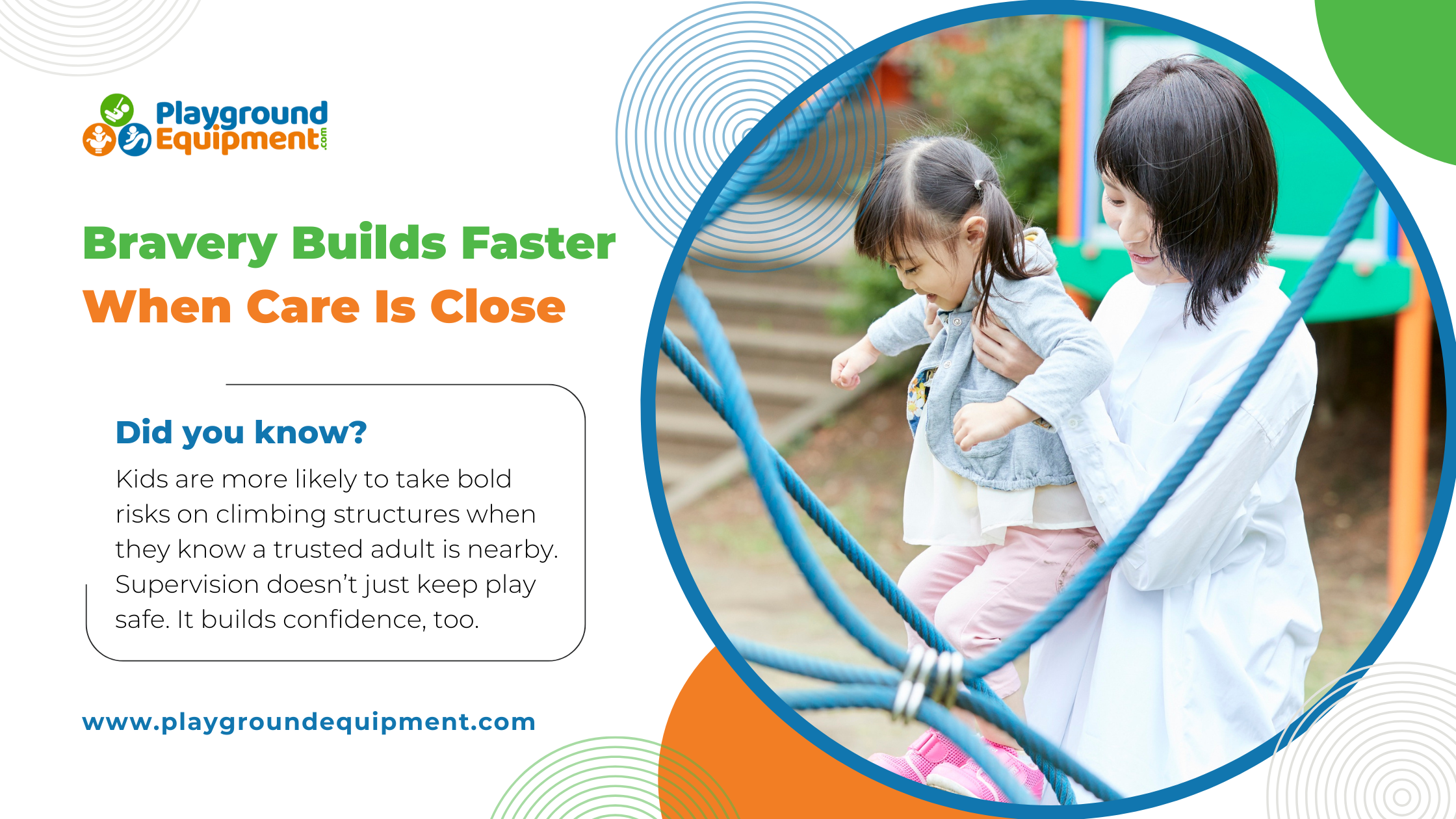
That added confidence pays off on the playground. Best of all, multiple children can climb at once without crowding each other, avoiding the bottlenecks swings create. The result? More kids playing for longer stretches with fewer interruptions.
Swings deliver fast thrills in small doses, while climbers invite big groups to spread out, explore, and invent their own adventures. In busy playgrounds, that difference often makes climbers the star attraction.
Designing Playgrounds That Keep Everyone Playing
The real question isn’t whether swings or playground climbing structures are “better,” it’s how to design playgrounds that deliver the best of both worlds. When done right, the two features don’t compete. They complement each other, creating a playground that feels complete.
Active vs. Calm: Finding the Flow
Swings provide a soothing rhythm that balances the high-energy challenge of playground climbing structures. Together, they give kids the option to switch gears—soaring for calm, scaling for adventure.
All Kids Welcome: Building Inclusivity
Not every child has the same interests, strengths, or abilities. A playground that offers both swings and playground climbing structures ensures no one is left out and every kid has something to love.
Growing Up Playfully: Encouraging Progression
Swings are a natural starting point for younger children, building balance and coordination. Playground climbing structures grow with them, offering fresh challenges as they gain strength, skill, and confidence.
The reason this balance matters is simple: kids thrive when they have choices. A well-rounded playground gives every child the chance to challenge themselves, recharge when needed, and play in ways that match their unique personality. It’s not about choosing sides—it’s about creating spaces where all kids can grow, laugh, and keep coming back for more.
So, Who Wins the Playground Crown?
If we had to pick, playground climbing structures usually take the lead. They keep kids engaged longer, welcome larger groups, and grow with children as they age. But that doesn’t mean swings are out of the picture. Their timeless thrill, sensory perks, and universal appeal make them just as essential.
The real secret? The best playgrounds don’t force a choice. They combine the soaring freedom of swings with the adventurous challenges of climbers, giving kids the chance to fly, climb, and create memories on their own terms. When play spaces strike that balance, every child wins.
At PlaygroundEquipment.com, that balance is exactly what we build. From layout design to installation, we help schools, parks, and communities create playgrounds that deliver fun, safety, and variety for every age group. Ready to start your project? Contact us today, and let’s make a playground worth crowning.
Climb Higher With These Reads
- How Do You Build An Outdoor Play Area For Kids?
https://www.playgroundequipment.com/how-do-you-build-an-outdoor-play-area-for-kids/ - How Do I Choose The Right Size Of Playground Equipment For My Space?
https://www.playgroundequipment.com/how-do-i-choose-the-right-size-of-playground-equipment-for-my-space/ - Future-Proofing Your Playground: How to Plan for Replacement Parts and Long-Term Upgrades
https://www.playgroundequipment.com/future-proofing-your-playground-how-to-plan-for-replacement-parts-and-long-term-upgrades/ - Managing Expectations: Common Surprises in Commercial Playground Projects
https://www.playgroundequipment.com/managing-expectations-common-surprises-in-commercial-playground-projects/ - Design Basics: The Playground Design Essential Guide
https://www.playgroundequipment.com/design-basics/ - Do Wooden Swing Sets Need to be Anchored?
https://www.playgroundequipment.com/do-wooden-swing-sets-need-to-be-anchored/
Learn About the Author

Nicolas Breedlove, founder and CEO of PlaygroundEquipment.com, transformed a small business into an industry leader known for its superior-quality products and strong distribution network. Drawing on early experiences in various roles, Nic's customer-centric approach and entrepreneurial spirit have set his company apart. Under his leadership, PlaygroundEquipment.com continues to thrive, delivering innovative, safe, and durable playground solutions.
Nicolas on linkedin