Designing Inclusive Playgrounds: Practical Examples
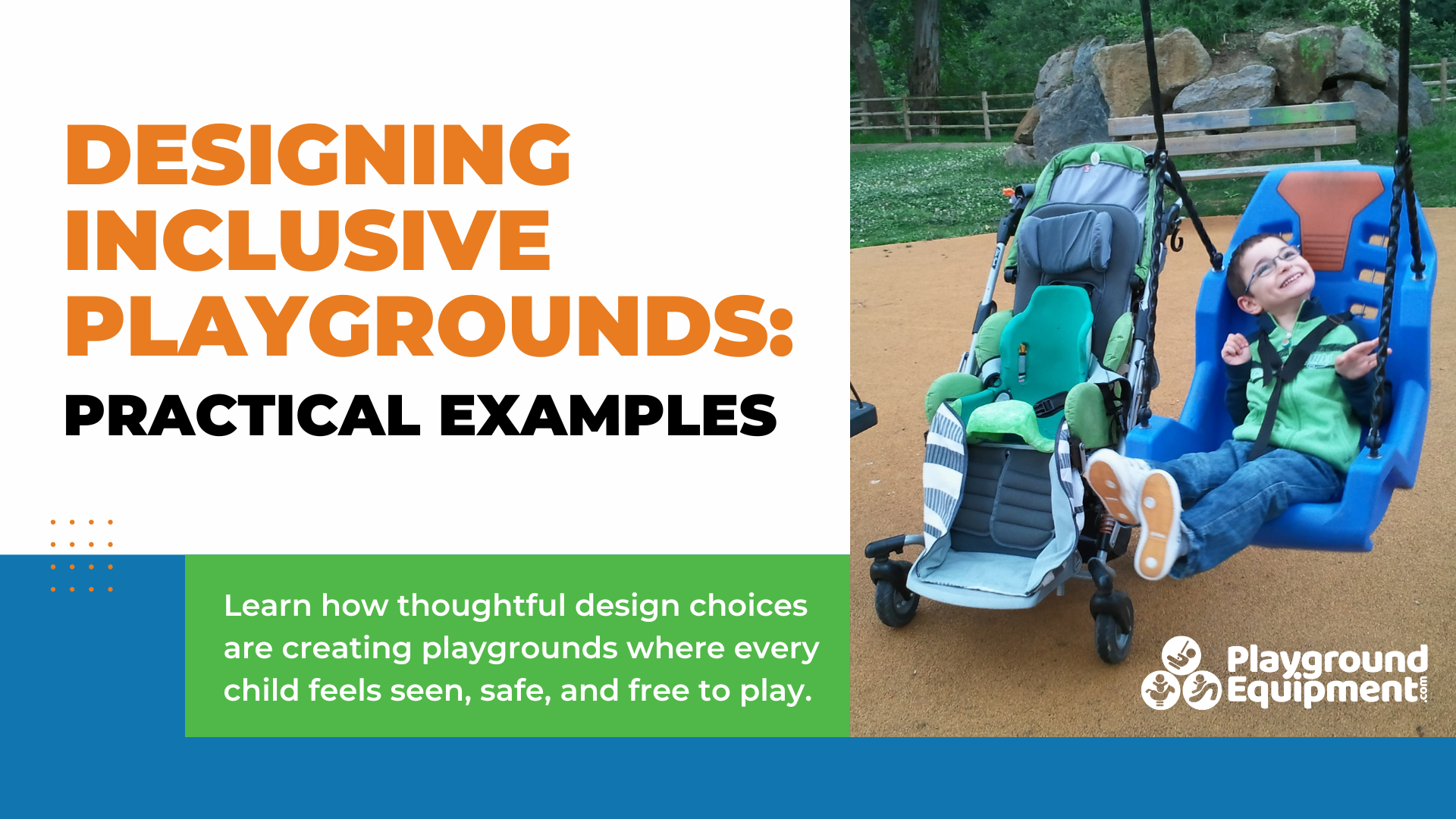
Every child deserves a chance to fly down a slide, conquer a climbing wall, or spin until dizzy—not just the ones who fit a narrow mold of ability. Yet for too long, playgrounds have been designed with a "one-size-fits-all" mentality that leaves countless kids on the sidelines.
At PlaygroundEquipment.com, we believe that inclusive design isn't just a checkbox—it's a commitment to creating spaces where every child can play, grow, and thrive together. With decades of experience transforming ordinary play spaces into extraordinary communities of joy, we've seen firsthand how thoughtful design choices can turn exclusion into belonging. Let's explore the practical, real-world strategies that make inclusive playgrounds not just possible, but powerful.
Understanding What “Inclusive” Really Means in Playground Design
At its core, inclusivity means everyone plays together. An inclusive playground goes beyond ADA compliance: it doesn’t separate children with disabilities but integrates accessibility into every part of the layout so all kids can share the same experience.
That means accessible surfacing for smooth mobility, sensory-rich play elements for kids with autism or sensory processing needs, and safe, varied structures that offer choice, challenge, and comfort for all ability levels. At PlaygroundEquipment.com, our goal is to create playgrounds that complement how children naturally interact — curious, imaginative, and social — while providing equal opportunities for play and growth.
An example? Picture a child using a mobility device moving seamlessly across poured rubber surfacing to join friends at a play panel, while another child with sensory sensitivities finds calm engagement with tactile features nearby. That’s true inclusion — intentional, balanced, and beautiful.
Practical Example #1: Ground-Level Play that Encourages Cooperation
One of the simplest yet most effective ways to promote inclusion is by designing ground-level play opportunities that are rich and engaging for everyone.
Take interactive play panels, for example. These are far more than decoration—they’re dynamic tools for learning and social growth. Panels like the Musical Play Wall or Tic-Tac-Toe Spinner found in many PlaygroundEquipment.com installations encourage peer cooperation and communication. Children can play together from seated or standing positions, fostering teamwork and mutual understanding.
Inclusive ground-level activities also include features like crawl tunnels, talk tubes, drums, and sandbox areas—each designed to be accessible to children with mobility devices or developmental differences. By placing high-value activities at ground level, we make play equitable and engaging for everyone, not just those who can climb.
Practical Example #2: Ramps, Routes, and Surfacing that Welcome All
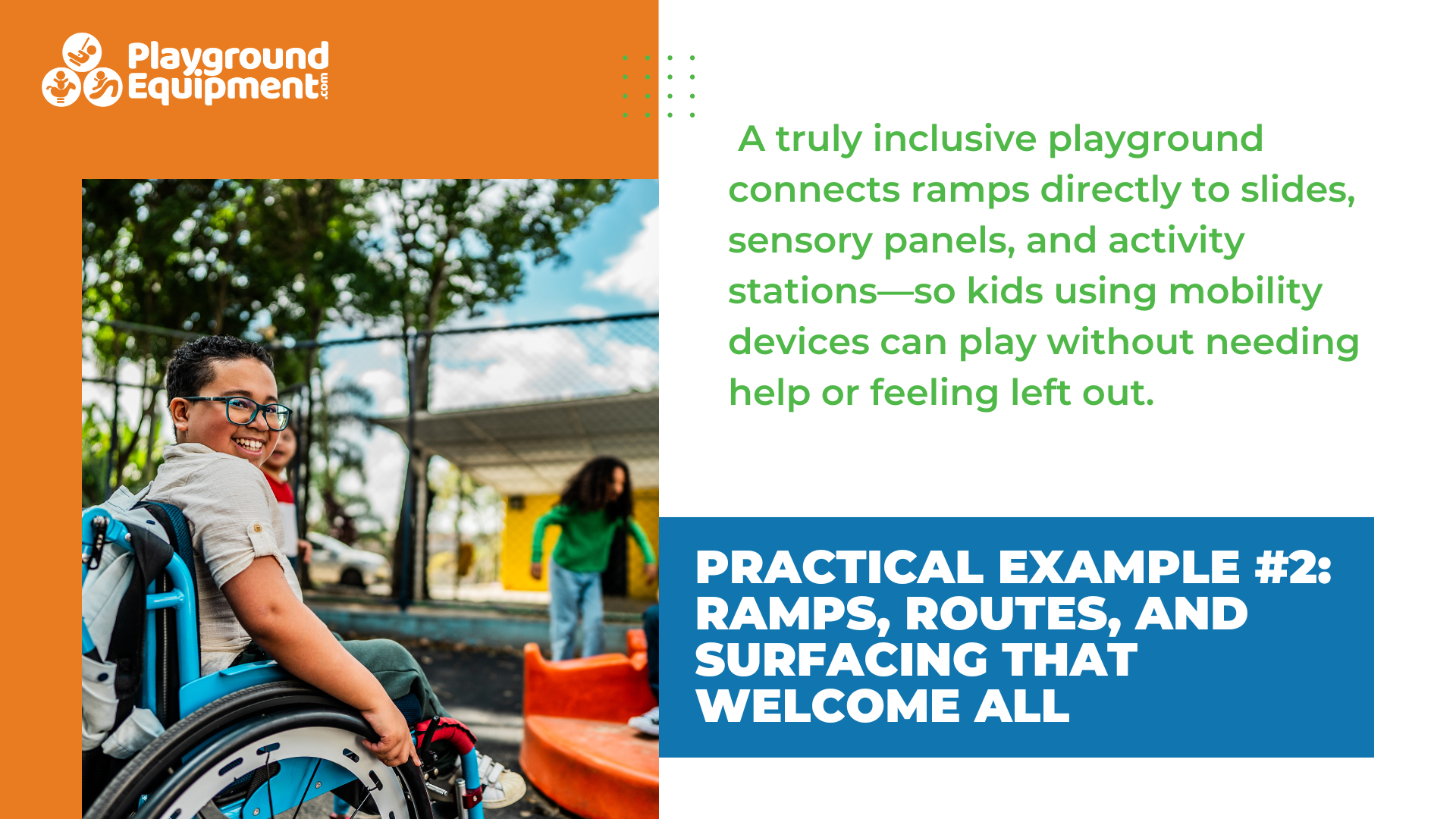
An inclusive playground needs thoughtful navigation. If a child can’t reach a play structure safely, the design has already failed them. That’s why accessible surfacing is one of the most crucial investments a community can make.
PlaygroundEquipment.com frequently recommends using poured-in-place rubber surfacing or engineered wood fiber (EWF)—both ADA-compliant options that allow smooth, stable movement for wheelchairs and walkers.
But great design doesn’t stop with the surface. Play structures should include ramp systems that lead to meaningful activities—not just observation decks. We often see ramped structures integrated with slides, sensory panels, and activity stations, giving children using mobility devices the same variety of choices as anyone else.
Example in action: In a recent school playground project, our team incorporated a continuous ramp system that connected directly to sensory panels, musical instruments, and an accessible double slide. The result? Students of all abilities were able to participate without waiting for help or feeling excluded.
Practical Example #3: Sensory-Rich Play Areas
A truly inclusive playground stimulates all the senses: sight, sound, touch, movement, and even balance. These environments offer children with autism, sensory processing disorders, or developmental challenges new ways to engage meaningfully.
Sensory play at PlaygroundEquipment.com often comes to life through features like interactive drums, spinning sensory wheels, textured pathways, and shaded quiet spots. These elements combine movement and calm, catering to both seekers and avoiders of sensory input.
For instance, a Sensory Exploration Zone might feature panels that vibrate with sound or light, tactile surfaces that encourage discovery, and motion elements like cozy spinners or gliders. Children who need a break from active play can retreat to these quieter spaces while still staying part of the playground’s social dynamic.
By thoughtfully layering sensory experiences, we create environments that nurture curiosity and inclusion side by side.
Practical Example #4: Adaptive Swings and Motion Play
Few playground memories are as iconic as swinging. But for many children with physical disabilities, traditional swings aren’t an option. That’s why PlaygroundEquipment.com offers a wide array of adaptive swing seats, high-backed harness swings, and multi-user swings.
Adaptive swings provide full-body support and a secure fit, letting children experience the soothing rhythm of movement independently or with caregiver assistance.
Motion play also includes merry-go-rounds designed with flush entrances, gliders that seat multiple children, and rocking cabins that promote group play. When inclusion meets motion, movement becomes connection—not limitation.
Practical Example #5: Designing for Caregivers and the Community
Inclusivity extends beyond children. It also includes the parents, grandparents, and guardians who accompany them. When a playground is designed with accessibility in mind, it promotes social inclusion for families as well.
PlaygroundEquipment.com advises incorporating wide pathways, seating with back support, and shade structures that accommodate all users. These thoughtful touches create gathering points where families can supervise comfortably and connect socially.
In addition, inclusive playgrounds play a vital role in the broader community. They serve as hubs for learning empathy, diversity, and cooperation. Public spaces that welcome everyone reflect a community’s values in tangible form.
One of our recent municipal projects took this approach to heart, integrating wheelchair-accessible picnic tables, inclusive signage with braille, and shaded rest areas—all surrounding a centrally located inclusive play zone. The feedback? Overwhelmingly positive, with families expressing how the design provided freedom and dignity in everyday play.
Building an Inclusive Future with PlaygroundEquipment.com
Inclusive playgrounds remind us that play is the great equalizer, with children engaging with the world in diverse ways. Every swing, ramp, and panel carries a message: You belong here.
At PlaygroundEquipment.com, we’re here to turn your vision into reality. From concept design to installation, our expert team ensures your playground is safe, compliant, and—most importantly—welcoming. Whether you’re enhancing an existing park or starting from scratch, we’ll help you plan a space that sets a new standard for community inclusion and engagement.
Ready to create a playground where everyone can play, learn, and grow together? Contact us today, and let’s design the inclusive playspace your community deserves.
Unlock the Secrets of Great Play Spaces Through These Expert Picks
- Because inclusive features do not have to break the bank:
- For more ways of designing accessible swing sets and playsets:
- Understand about ADA compliance without professionals needed:
- Because neutral color palette is a recommended inclusive playground design trend:
- Learn how playgrounds significantly improve children’s overall development:
Learn About the Author

A CPSI-certified playground inspector, Nic has been with PlaygroundEquipment.com for over three years. Nic has a keen interest in playground design, construction, and installation, and he uses this passion to drive his work to new heights. In his free time, Nic enjoys hanging out with friends and living life to its fullest.
Nic on linkedin