Designing Playgrounds for Space Efficiency: What to Know About Equipment Footprints
They say you can’t always get more space, but you can squeeze the most out of every corner. On playgrounds, that statement is truer than ever. When designed with efficiency in mind, you can maximize play value, minimize wasted space, and create a layout that serves your community for years to come.
At PlaygroundEquipment.com, we know that every square foot counts when it comes to designing safe, engaging, and efficient play environments. The key to unlocking that potential? Understanding and planning around the playground equipment footprint.
A playground’s footprint is more than just the size of the equipment itself. It’s also about the real-world impact on space planning, safety clearances, and the overall flow of the site. Let’s break down what every decision-maker, designer, and community planner should know about equipment footprints.
What Exactly Is an Equipment Footprint?
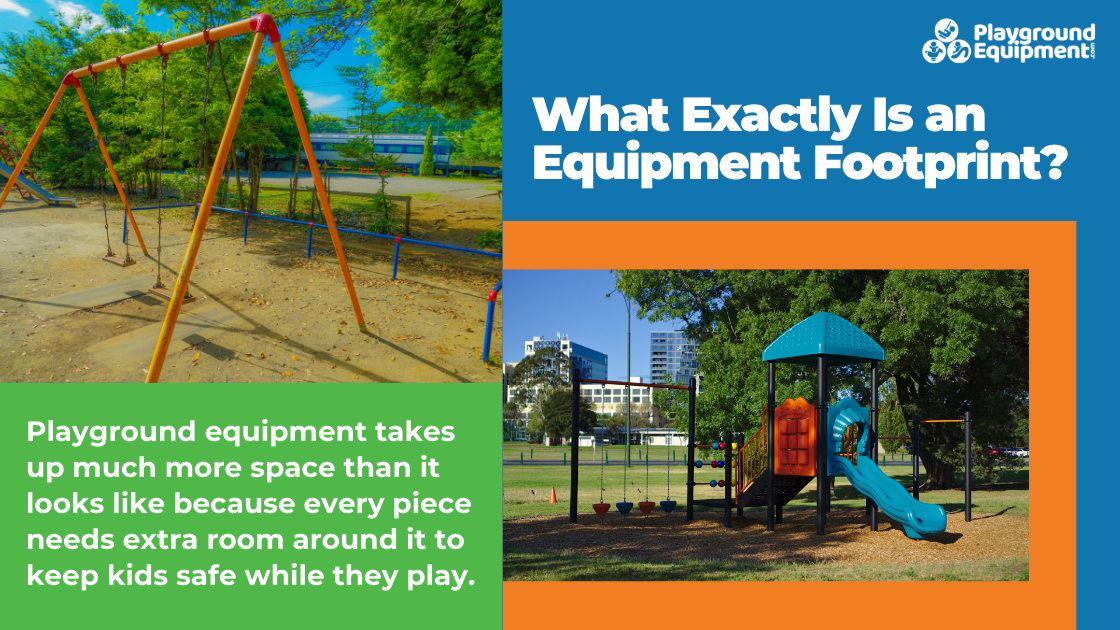
An equipment footprint is the total amount of ground area a play structure or piece of equipment occupies, including both its physical dimensions and the required safety zone around it.
- The Equipment Itself: This is the literal width and length of the structure. For example, a 10’ x 15’ climbing net doesn’t stop at those numbers when it comes to planning.
- The Safety Zone: Manufacturers, guided by ASTM and CPSC standards, require clearance space around each unit to prevent collisions, falls, and overcrowding. That climbing net may need an additional 6 feet of open space on each side, expanding its footprint to nearly 22’ x 27’.
Without the proper understanding of both elements, designers can risk creating layouts that feel cramped, unsafe, or non-compliant. At PlaygroundEquipment.com, we always account for the “true” footprint, helping schools, parks, and communities avoid costly redesigns later.
Understanding Space Requirements for Common Structures
Different types of playground equipment demand different amounts of space. While the visible size of a structure matters, the protective use zone around it is equally important.
Swings: Wide Arcs Require Extra Room
Swings need generous clear zones in both the front and back to account for motion. Typically, the safety zone is twice the height of the swing beam in front and back.
Slides: Length Plus Exit Safety
Slides require open space at the base for safe landings. A rule of thumb is that the exit zone should extend at least six feet beyond the slide’s end.
Climbers: Room for Movement
Climbing structures encourage active play in all directions, so they need extra breathing room. Circular clear zones often extend six feet outward from the structure.
Multi-Deck Play Systems
Large play systems combine slides, bridges, and towers. These require careful measurement of both footprint and flow zones so that one feature doesn’t interfere with another.
Factors That Influence Equipment Footprints
Footprints vary widely, and several factors can shape how much space each piece requires. At PlaygroundEquipment.com, we guide our clients through these considerations so nothing important slips through the cracks.
-
Equipment Type
Multi-activity play structures often require larger use zones than standalone elements like balance beams. Slides, swings, and climbers each come with unique clearance requirements.
-
Age Group
Playgrounds designed for toddlers (ages 2–5) differ significantly from those for older children (ages 5–12). Smaller structures often have tighter footprints, while equipment for older kids typically needs broader zones for climbing, swinging, and running.
-
Surface Material
Safety surfacing—like poured-in-place rubber or engineered wood fiber—can influence layout. For example, impact-attenuating surfaces sometimes allow for more flexible designs because they help absorb falls within smaller use areas.
-
Layout Context
Is your playground bordered by a fence, walkway, or building? External boundaries must be factored in to ensure safety zones aren’t compromised.
Designing for Space Efficiency
Now comes the strategic part: making footprints work in your favor. Here are some design insights our team uses to help clients maximize their space:
Start with a Site Map
Always begin with accurate measurements of your available space. Factor in natural elements like trees, slopes, or pathways that could restrict usable square footage.
Prioritize High-Value Equipment
If space is limited, start with equipment that offers the greatest variety of play. A modular play system with multiple activities in one structure often provides more play value per square foot than several scattered standalone pieces.
Layer Play Zones Thoughtfully
Place high-energy equipment like swings and slides toward the perimeter, where their large use zones won’t interfere with other activities. Reserve the core of the playground for compact structures or social play areas like playhouses and spinners.
Balance Active and Quiet Areas
Not every child wants to sprint and climb. By mixing high-intensity equipment with quieter spaces (benches, shade structures, or small play panels), you make the playground feel less crowded and more inclusive.
Use Natural Flow
Think of your playground like a walking path. Arrange equipment so children can move smoothly from one activity to the next without bottlenecks. This keeps the space feeling open while making every square foot functional.
Partnering with PlaygroundEquipment.com for Smart Footprints and Smarter Playgrounds
Playground design is a puzzle, and equipment footprints are the pieces that make the picture come together. By understanding the true space demands of each structure, balancing safety with creativity, and choosing efficient and versatile equipment, you can transform any site into a thriving hub of play.
At PlaygroundEquipment.com, we’ve helped thousands of schools, parks, HOAs, and municipalities make the most of their available land. From selecting the right structures to plotting out safety zones and surfacing, we bring decades of experience to every project.
Tap us today for a personalized consultation, or explore our extensive collection of space-efficient playground solutions. Because when it comes to creating extraordinary play experiences, size doesn't matter—smart design does.
Unlock the Secrets of Great Play Spaces Through These Expert Picks
- For making sure your space is suitable for installation:
Site Assessment Tips: Ensuring Your Space is Ready for Installation - PlaygroundEquipment.com
- For more ways to ensure the right playground equipment sizes:
How Do I Choose The Right Size Of Playground Equipment For My Space? - PlaygroundEquipment.com
- For choosing all-rounder and age-appropriate playground equipment:
How to Choose Age-Appropriate Playground Equipment for Mixed-Use Spaces - PlaygroundEquipment.com
- For more tips on an effective playground layout:
- For more ways of purchasing throughout the seasons:
Seasonal Buying Guide: When to Start Your Playground Project - PlaygroundEquipment.com
Learn About the Author

Derick has been a mainstay of PlaygroundEquipment.com for nearly a decade. In that time, he’s earned a CPSI certification for his in-depth knowledge of playground safety and installation. With years of playground experience, Derick brings a wealth of knowledge and expertise to the table, which he uses to help better the lives of children on the playground. In his downtime, Derick enjoys rock climbing and playing video games.
Derick on linkedin