Mounting Playground Equipment on Asphalt: Why It’s Not Recommended and Safer Alternatives
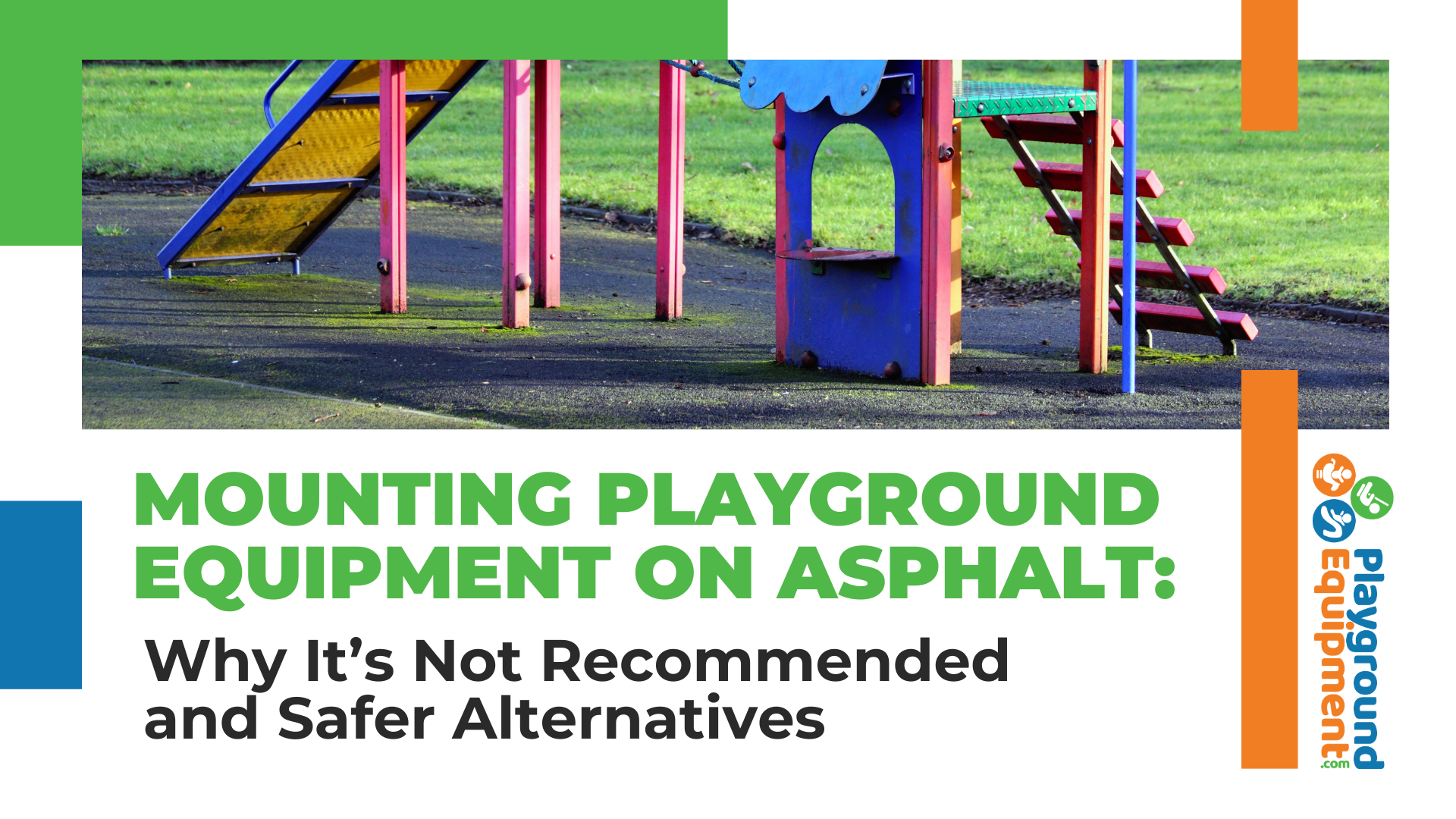
While we see something as readily available, it may not always be the best choice, especially when it comes to playground planning. After all, asphalt surfaces are common in schools and parks, offering what seems like a flat, stable foundation. However, mounting playground equipment on asphalt creates serious safety hazards that can lead to devastating injuries and expensive lawsuits.
At PlaygroundEquipment.com, we've guided countless communities away from this dangerous practice toward safer, compliant alternatives. With over 200,000 emergency room visits annually resulting from playground injuries, many of which involve falls onto hard surfaces, understanding compliant surfacing is no longer just important. It's essential for protecting children's lives. Here's why playground equipment on asphalt is hazardous and what safer, smarter surfacing options are available.
The Serious Safety Risks of Playground Equipment on Asphalt
Installing playground equipment on asphalt violates fundamental safety principles that playground designers have established through decades of injury research and tragic accidents.
Impact Absorption: The Critical Missing Element
When children fall from playground equipment onto asphalt, the hard surface provides no impact absorption. Unlike proper safety surfacing that compresses to absorb fall energy, asphalt transfers 100% of the impact force directly to a child's body.
This creates a catastrophic injury potential of:
- Traumatic brain injuries from head impacts with unforgiving surfaces
- Broken bones and fractures in arms, legs, and ribs
- Spinal cord injuries that can cause permanent paralysis
- Internal organ damage from high-impact falls
Even a fall from a modest 4-foot slide onto asphalt can result in life-threatening injuries, whereas the same fall on proper safety surfacing might result in nothing more than a few scrapes.
Regulatory Violations and Legal Liability
The Consumer Product Safety Commission (CPSC) explicitly prohibits playground equipment on asphalt in its Public Playground Safety Handbook. Most playground injuries occur when children fall from equipment onto inappropriate surfaces, making compliant surfacing a non-negotiable safety requirement.
Installing playground equipment on asphalt exposes your organization to:
- Massive liability lawsuits from preventable injuries
- Insurance claim denials due to non-compliance with safety standards
- Regulatory fines and forced facility closures
- Equipment warranty voidance by manufacturers
Why Asphalt Fails as a Long-Term Playground Solution
Beyond immediate safety concerns, playground equipment on asphalt creates ongoing maintenance and structural problems that compound over time.
Structural Integrity Issues
Asphalt expands and contracts with temperature fluctuations, creating an unstable foundation that compromises playground equipment integrity, such as:
- Anchor bolts loosen as the surface shifts, creating dangerous instability
- Uneven stresses cause premature wear on play structure components
- Surface cracking creates trip hazards and drainage problems
- Temperature extremes make surfaces burning hot in summer and dangerously slippery when wet
Hidden Financial Costs
While asphalt might appear cost-effective initially, the true expenses quickly accumulate through higher insurance premiums, frequent equipment repairs, eventual surface replacement requirements, and potential legal settlements from injury claims.
Proven Safety Surface Alternatives That Actually Work
The good news is that safe, cost-effective alternatives to playground equipment on asphalt are readily available. Modern safety surfacing options provide excellent impact protection while meeting all federal and state requirements.
Engineered Wood Fiber: The Budget-Friendly Champion
Engineered wood fiber is a low-cost, easily maintainable playground surfacing option for those with budget and safety at the forefront of their project considerations. This natural material offers:
- ASTM compliance: Meets all fall height requirements when properly installed
- Easy maintenance: Simple to replenish and rake level
- Natural drainage: Water filters through without creating puddles
- Cost effectiveness: Significantly less expensive than rubber alternatives
Rubber Surfacing Solutions: Premium Protection
For facilities prioritizing maximum safety and minimal maintenance, rubber surfacing options deliver superior performance:
Poured-in-Place Rubber: Creates a seamless, customizable surface that's ADA-compliant and available in endless color combinations. PIP surfaces typically consist of colorful crumb rubber held together with binding agents to create a seamless, unitary playground surface.
Rubber Tiles: Pre-manufactured tiles that install quickly over existing surfaces, though poured rubber surfaces may need to be replaced every 5-7 years due to deterioration from UV exposure.
Rubber Mulch: Loose-fill material that provides excellent impact absorption and long-lasting performance, though it requires a higher initial investment than wood alternatives.
Alternative Natural Materials
Alternatives to rubber- and plastic-based products include wood chips, bark mulch, engineered wood fiber (EWF), pea gravel, or sand, each offering specific advantages for different playground environments and budgets.
Practical Guidance for Playground Planners
When selecting alternatives to playground equipment on asphalt, consider these critical factors:
Assessing Your Specific Needs
- Fall heights: Higher equipment requires deeper, more impact-absorbing materials
- User age groups: Different surfaces work better for various developmental stages
- Climate considerations: Some materials perform better in specific weather patterns
- Maintenance capabilities: Choose surfaces your staff can realistically maintain
- Budget parameters: Balance initial costs with long-term maintenance expenses
Professional Installation Requirements
Even superior surfacing materials won't protect children if improperly installed. Professional installation ensures correct material depths, proper drainage grading, regulatory compliance, and manufacturer warranty protection.
Creating Safer Play Environments with PlaygroundEquipment.com
The evidence is loud and clear: mounting playground equipment on asphalt may look like a shortcut, but it’s a shortcut to higher risks, greater costs, and unsafe play. Communities and the children deserve better. By choosing safer surfacing alternatives and proper installation techniques, you’re not just building a playground. You’re building trust, safety, and joy that will last for years.
At PlaygroundEquipment.com, we’re here to make that happen. Contact us today for a free quote, specialized support, and a team that cares about every detail of your project. Together, let’s create playgrounds where safety and fun go hand in hand.
Unlock the Secrets of Great Play Spaces Through These Expert Picks
- For more ways of selecting safety surfacing within budget:
How to Select Surfacing That Meets Safety Standards and Fits Your Budget - PlaygroundEquipment.com
- For more mounting application:
- For understanding children’s playsets more:
Are Kids Playsets Worth It? - PlaygroundEquipment.com
- Know the importance of post-installation inspections:
The Role of Post-Installation Inspections in Long-Term Playground Safety - PlaygroundEquipment.com
- For more ways of purchasing during playground planning:
Learn About the Author

A CPSI-certified playground inspector, Nic has been with PlaygroundEquipment.com for over three years. Nic has a keen interest in playground design, construction, and installation, and he uses this passion to drive his work to new heights. In his free time, Nic enjoys hanging out with friends and living life to its fullest.
Nic on linkedin